

Postcards from the agency trenches...
The gif makers.

How creative can someone really be when they’re in the wrong tune? But never mind he is a “he,” after all, a creative man. And no, no GIF should ever be 4MB. What the actual fuck?
That was my first thought. And the more I looked into it, the clearer it became: this wasn’t incompetence it was intentional. A kind of internal boycott, dressed up in Converse far from the streets, but hipster-behavior ego-driven, slow-moving, and addicted to drama.
These guys weren’t interested in solving problems. They loved creating them. That was the real job: invent roadblocks, flex over file specs, stall everything. Like, are you actually planning to print that 4MB GIF? Be serious.
Once I figured out what was actually breaking the campaign tool, it was laughable. “We’re going for quality,” they said. Please. That’s the fakest dichotomy out there. Quality ≠ weight. Big file sizes don’t make your work important they just make it unusable. We left that logic behind in the early 2000s. And for an email campaign? Even worse. No efficiency in sight. Stop blaming the engine, when the windshield is moldy.
So someone stepped in. Not a hero. Just the only person in the room who knew that production means unblocking, not performing. The absent creative director was one of those protégés busy pleasing the VIP people. For the record, he was not doing his job. Craft doesn't wait for titles. You see the urgent problem: a 4MB GIF. And you solve it. What matters is knowing how to unblock. How to see what's actually breaking. How to slow down a frame rate. How to ask for a new license. And how to write the "How To" manual for the lost-in-the-ocean team.
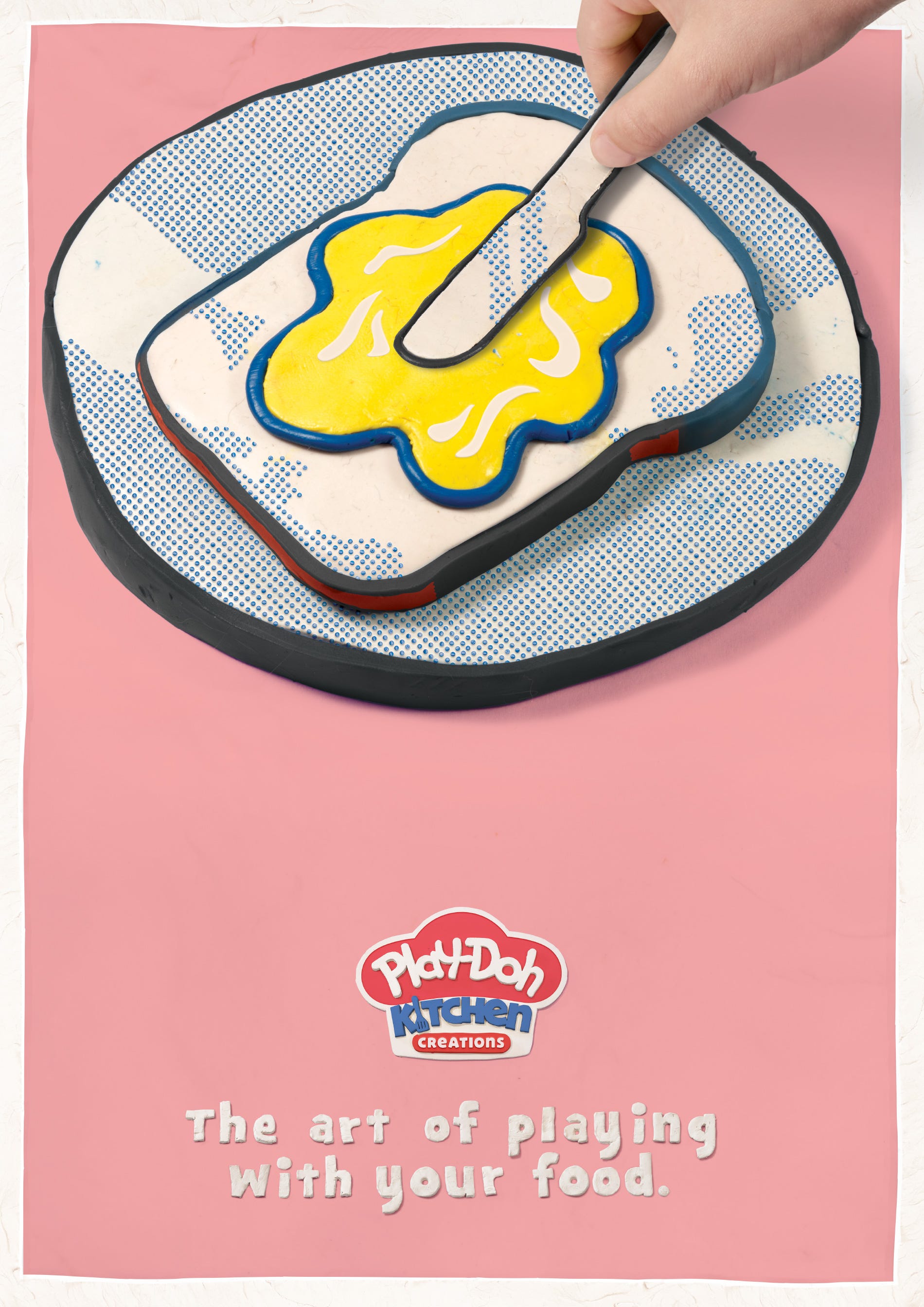
Meanwhile, these guys clung to their favorite kind of theater: useless processes, endless sign-offs, fake urgency. Playing with their food without eating it. Their masterpiece was the delay. They pulled out After Effects — the big guns — and I thought, we're not making Marvel films. What you need is a clue. But instead of solving, you request software, chase licenses, survive the bureaucracy. Just to make something functional. it wasn't a creative failure in my perspective, It was more like a a culture problem. A bunch of egos playing, clinging to tools they barely understood, and calling it "craft." So, I assumed for my own sake, that these art directors were groomed by the same system that was crushing me, they were trying to make something outta nothing. They were not essential, this weren’t commercials. They had learned that delay as a soft bullying was the only power they had left.
Here’s the part that doesn’t make it into the case studies: a “big name agency” shouldn’t need someone to explain frame rate. But there I was, suggesting it. Before even opening their After Effects file. Because the first thing you learn in production any production, film or digital is that you don’t reach for the big guns when the problem is elementary. This wasn’t Marvel, was a GIF. And it could’ve been done in Final Cut with Compressor, or Adobe Premiere. Even Photoshop. Really. Photoshop.
And here's the thing: I'm not a post-producer. But I am apparently the senior manager — the infiltrated producer — putting together a tutorial. Because somewhere in that digital agency, with their own in-house unit technically separate but flying the same flag, no Art Director had built a basic GIF workflow proper for an email marketing campaign. "Whoah," said Dave, the tool partner, when he noticed the file size. Nobody had thought to work downstream from the asset, to treat the material before touching the timeline. You don't open a raw billboard file client just upload to the cloud, and start animating. That’s not craft and maybe that’s not even amateur or that’s just not knowing where the process starts as any TikTok savage kid.
The first stop is always the material. If it’s too big, you don’t work with what the brand handed you. You compress. You transcode. You check your codec, your frame rate, your metadata technical metadata, the stuff baked into the file, and content metadata, the layer you add so anyone who comes after you knows what they’re looking at. That’s not advanced knowledge and when you can’t do the task, you ask for help, where’s your teamfckingnetwork then?
A top-tier agency? A global name?
You’d fall to your knees too.
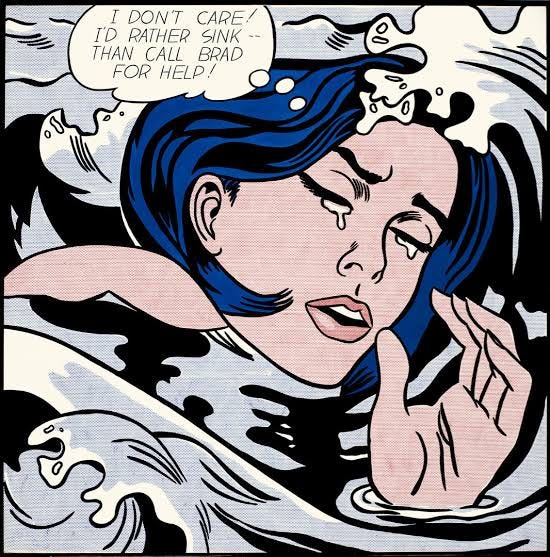
Replacing talent like these is the easiest thing for AI automation. Because what is there to replace, the robot who actually knows how to compress and render? A clone remixing the same references. A copywriter whose big idea is a pun in Helvetica. There was no pure human sense to protect no search, no risk, no opinion. Just function dressed as creativity.
For the “purists,” technology is often about determinism: if you input X, you must get Y, every single time, with 100% traceability. AI, by nature, is probabilistic. It doesn’t follow a rigid recipe, but learns patterns.
In a creative environment, the disruption is even more visceral because it attacks the “Sanctity of the Process.” For a purist, creativity is an act of intentionality, every brushstroke or word is a choice. AI disrupts this by introducing curation over creation.
How AI plays out in the creative sandbox:
1. From “Blank Page” to “Infinite Iteration”
In a conservative creative workflow, you start at zero and build upward. AI flips the script.
The Purist Approach: Idea→Sketch→Refinement→Result.
The AI Disruption: Prompt→100 Variations→Selection→Refinement.
The “creative act” shifts from being the person who swings the hammer to being the Art Director who chooses which nail looks best.
2. The “Happy Accident” vs. The Calculated Move
Traditional creative tools (like Photoshop or Logic Pro) are “accurate engines.” If you move a slider to +10, you know exactly what will happen. They are obedient.
The Disruption: AI is semi-autonomous. It introduces “emergent properties” it might give you a texture or a melodic phrasing you didn’t ask for but actually love.
The Purist’s Fear: If the “soul” of art is the struggle, what happens to the value of the work when the struggle is removed by a probabilistic engine?
And I must confess, this is where I romanticize it, I love this unique way of the spark of creativity. When a scene is delaying because a director is "working with the actors" on set meanwhile the crew is bored, waiting in the hallway, in deadly silence, but alert as a German Shepherd. Inside, they are calling for the divine fairy spark with the only tool that matters: emotions.
3. The Collapse of Technical Barriers
Historically, you had to spend 10,000 hours mastering the “engine” (the violin, the oil paint, the CAD software) before you could express a complex idea.
The Shift: AI decouples taste from technique.
The Result: We are seeing a “democratization” that feels like an “invasion” to purists. If a kid with a good prompt can produce a cinematic masterpiece, the “accurate engine” (the years of technical schooling) suddenly loses its status as a gatekeeper.
And that’s fine. Agency creativity isn’t art. It’s not a painting, a poem, or a film. Clients know this. The work serves something engagement, leads, KPI’s. The problem is not that it’s functional. The problem is that the industry forgot it was functional and started believing its own mythology. I mean functional things could be beautiful also, in their own way, like brutalism.
But I’ll ask what they won’t: what is brand-creativity, actually, if the clone was already doing it on autopilot?
Sorrentino doesn’t ask what beauty is. He goes looking for it frame by frame, in the decay of Rome, in an old cardinal’s face, in the silence before the music drops. That’s the search. That’s the work. Where is that search inside a General Motors ad? More importantly: is it even necessary?
In times like these, art direction works as decoration for engagement and leads. Where is the great beauty in a campaign built by someone too scared to have an opinion?. Mostly, audiences are paying to skip ads.
AI didn’t kill creativity in that agency. The clones did. The machine just arrived to an already empty room.
You know who else stopped searching? The humans in WALL-E. Floating in their recliners, screens inches from their faces, consuming without producing, entertained without feeling, alive without living, expanding their bodies. That’s not a dystopian future. That’s the agency creative department on a Tuesday. The machine didn’t make them passive. They were already gone. So close of Netflix’s Love, Death & Robots dystopias, so far from Wild Robot’s creative insights on humanity.
Finally, I’m not big on long back-and-forth discussions I think ideas should be solid and compelling, but still leave room to evolve. The “evolving” relies on the inspiration and own breathing work of the creative. Is it a 4MB .GIF hallucination or are we gonna finally accept that A.I. was Inevitable in a world that seems not to have a Technological Ceiling?
For this case: Yes. Not because of a technological ceiling, but because of a human floor. It’s the sound of an industry begging to be automated because it’s too tired to actually think.
Names and companies withheld, because the industry already knows who they are. This is about the system, not the symptoms.
Spot on. That comparison to WALL-E is chillingly accurate when we stop searching for beauty and start optimizing for roadblocks, we’ve already surrendered to the machine. Great read.
You really have a special talent to connect concepts, ideas, etc. I'm still working on making friends w A.I. I think it was inevitable. The issue are the hands behind it.